


JUL 28, 2026 · Beyoncé
Beyoncé
The Cost of Controlling the House
A Psychonomics profile of Beyoncé — Hermann Leadership Trait Analysis, Parkwood as institutionalized self, Lemonade’s canon economics, and an 8,000-line lyric machine.
By Kyle McAuliffe · · 5 min

Economics comes from the Greek oikonomia — the management of the house. Psychonomics asks the prior question: who is managing the soul of the house, and what does their inner architecture cost everyone living inside it? The founding Artometrics case was Julius Caesar: a leader who treated the self as the institution, extended trust freely, and was removed by the highest-centrality nodes in his own patronage graph.
Beyoncé Knowles-Carter is the entertainment-industry case for the same method. Born in 1981, solo debut album year 2003 in the Artometrics Rolling Stone file, she is not a head of state. She is a head of catalog — and of Parkwood Entertainment, the firm she founded in 2010 to keep authorship, touring, and filmed spectacle under one roof (Parkwood Entertainment). The psychonomic claim of this report is specific: where Caesar’s theory was magnanimous personal power without redundancy, Beyoncé’s theory is owned control of the creative house, paired with an affiliation-dense public voice and a spectacle-heavy measurable catalog.
0.91
Expert-coded Task Orientation (T) under Hermann (1999) LTA — the highest spike in this profile
0.88
Belief in Ability to Control Events (B) — surprise-album and Parkwood ownership signature
#32
Lemonade’s rank on the Rolling Stone 500 (2020 list) in the Artometrics album file
Leadership Trait Analysis
Beyoncé’s coded profile spikes on Task Orientation (T = 0.91) and Belief in Ability to Control Events (B = 0.88), with Need for Power (P = 0.86) and Conceptual Complexity (CC = 0.82) also well above the world-leader baseline. In-group bias (IB = 0.78) and Need for Affiliation (A = 0.74) sit high. Distrust of others (D = 0.62) is above baseline (0.48) — the opposite direction from Caesar’s D = 0.31.
That asymmetry is the psychonomic argument. Caesar’s dangerous triangle was ceiling power + floor distrust: convert everyone, absorb the Republic into the self, die by the inner ring. Beyoncé’s triangle is ceiling task/control + mid-high distrust + high affiliation: speak in “we,” build a fandom institution, but do not outsource authorship governance to rivals you have pardoned into the center. The public voice is warm; the firm boundary is cold.
The economic fingerprint
The Artometrics Rolling Stone albums file carries two Beyoncé studio albums on the 2020 RS500 list. The 2013 self-titled album: Billboard peak #1, 186 weeks on chart, Spotify popularity 75, RS rank #81, artist age-at-list ~32. Lemonade (2016): peak #1, 87 weeks, Spotify popularity 73, RS rank #32, age-at-list ~35. Debut album year in that file: 2003.
The control network
Caesar’s patronage chart had every edge terminating on a person. Beyoncé’s chart has a second center of gravity: Parkwood Entertainment — the firm that converts personal authorship into an institution that can sign, stage, and film without surrendering the name. Family (JAY-Z, Blue Ivy), formative group (Destiny’s Child circle), major-label distribution, live spectacle (Coachella → Homecoming), feature peers, and the Beyhive all connect — but governance weight sits on the Parkwood edge.
The affiliation machine
The packaged Artometrics extract holds 8,000 lyric lines across 139 song entities (~61.8k tokens, ~3,150 types). Top content signals are relational and imperative: love 543, baby 457, boy 283, girl 239, night 104. Identity/place markers appear at lower but non-trivial rates (black 59, texas 18). Abstract power language is scarce (power 5, queen 9).
Spectacle density
Among 139 song entities in the extract: 35 carry Ft. credits, 35 are live/awards/“Experience”-type performance documents, 19 are remixes, and 64 fall outside those flags. Top line-count entities include VMA performance text and a Destiny’s Child medley — long spectacle documents, not three-minute singles. Collaboration titles skew toward JAY-Z, with additional peers (Kanye West, Pharrell Williams, Nicki Minaj, and others) as catalog edges rather than co-governors.
Conclusion
Beyoncé’s Psychonomics profile is a high-control, high-task, affiliation-forward leadership shape with Parkwood as the institutionalized self. The economic fingerprint splits commercial longevity (self-titled’s 186 Billboard weeks) from canon elevation (Lemonade at RS #32). The lyric machine sells belonging; the firm keeps the keys. Compared with Caesar, the innovation is structural: distrust is high enough to keep knives out of the inner ring, and the house is built to be owned, not merely personally held.
■ END
The Fine PrintBack of the BoxEnd Credits
NoteWarningsDisclaimer
Artometrics data brief. Figures come from the sources below. Derived shares and editorial indices are not audited financials.
SourcesContentsSources
- SourceHermann, M. G. (1999). Assessing Leadership Style: A Trait Analysis. Social Science Automation. socialscienceautomation.org
- SourceHermann, M. G. (1980). Explaining foreign policy behavior using the personal characteristics of political leaders. International Studies Quarterly, 24(1), 7–46. doi.org/10.2307/2600126
- SourcePreston, T. (2001). The President and His Inner Circle: Leadership Style and the Advisory Process in Foreign Affairs. Columbia University Press. (Expert-coded LTA precedent for non-automated trait scoring.)
- SourceRolling Stone. (2020, September 22). The 500 Greatest Albums of All Time (2020 update). rollingstone.com — list positions for Lemonade (#32) and Beyoncé (#81).
- SourceBillboard. Billboard 200 weekly chart archives for Beyoncé (2013) and Lemonade (2016). Weeks-on-chart and peak positions cited in the economic fingerprint chart. billboard.com/charts/billboard-200
- SourceAcademy of Television Arts & Sciences. (2019). 71st Primetime Emmy Awards — nominee data for Homecoming: A Film by Beyoncé. televisionacademy.com
- SourceNetflix. (2019). Homecoming: A film by Beyoncé [Documentary]. netflix.com
- SourceParkwood Entertainment. Label, touring, and production structure. beyonce.com/parkwood
- SourceData Science Learning Community. (2020, November 3). TidyTuesday: Beyoncé & Taylor Swift lyrics. Corpus lineage for the lyric extract. github.com/rfordatascience/tidytuesday
- SourceMusicBrainz Foundation. Artist and release metadata for discography years and era sequencing. musicbrainz.org (Beyoncé artist record).
- ReportFull report: artometrics.com/beyonce
MethodAssemblyMethod
Numbers in this issue are the published figures. The skin changes type, rules, and chart color only.
PlatesMade byImage credits
- HeroArtometrics Beyoncé illustration.
- PlatePortrait of Luca Pacioli, attributed to Jacopo de' Barbari, c. 1495. Public domain, via Wikimedia Commons.
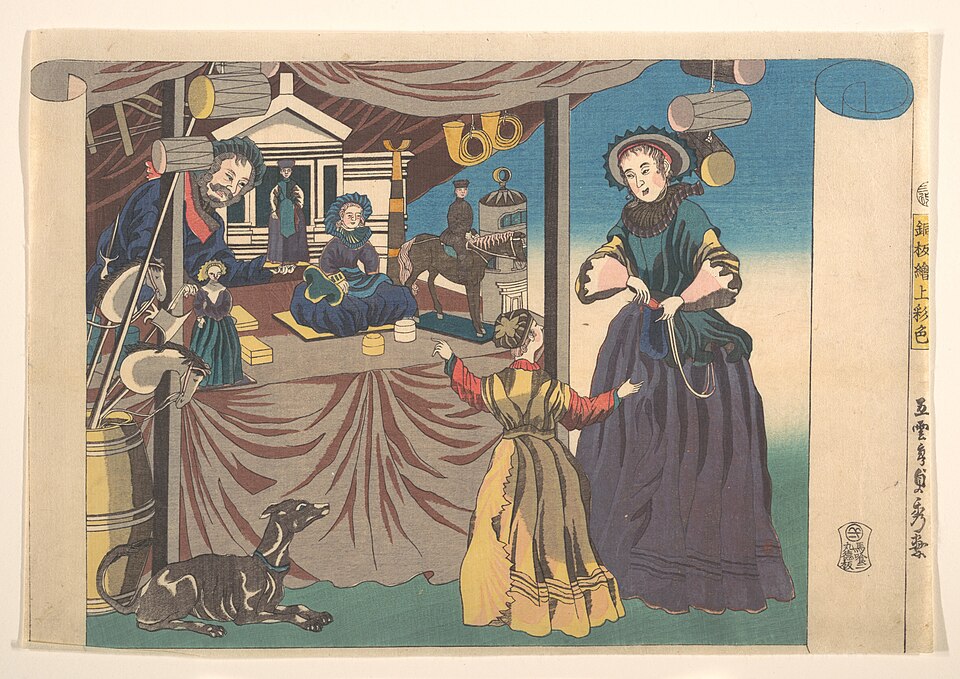
- PlateColor print of a toy shop, Utagawa Sadahide, 1860. The Metropolitan Museum of Art, CC0, via Wikimedia Commons.
- PlateBelasco Theatre box office, published November 1907 in Architects' and Builders' Magazine. Unknown photographer. Public domain, via Wikimedia Commons.


Updated through JUL 28, 2026.