
JUL 1, 2026 · Blockbusters
Blockbusters
How Movies Become IMDb Famous
Title fields, ratings, and box-office references explain how films accumulate attention.
By Kyle McAuliffe · · 3 min
Movies are perfect Artometrics objects because they are art, market, memory, and industrial strategy at the same time. A title page on IMDb is where those forces leave public footprints: genres, runtimes, ratings, and vote counts.
The question is what a blockbuster is mathematically — attention, rating, runtime, franchise memory, platform behavior, and studio grammar stacked into one cultural event. The pieces below treat IMDb’s non-commercial dataset architecture as a scoreboard for that grammar, with box-office and platform references for context.
Seven core TSV files are publicly documented; the refresh cadence is daily. Up to three genres can appear per title-basics row. Avatar’s runtime sits at 162 minutes. An illustrative 69% sequel/franchise share among top hits in the 2020s frames the sequelization chart; five charts carry the argument.
7
Core IMDb non-commercial TSV files publicly documented
Daily
IMDb dataset refresh cadence
3
Genres can be listed per IMDb title basics row
Attention versus Quality
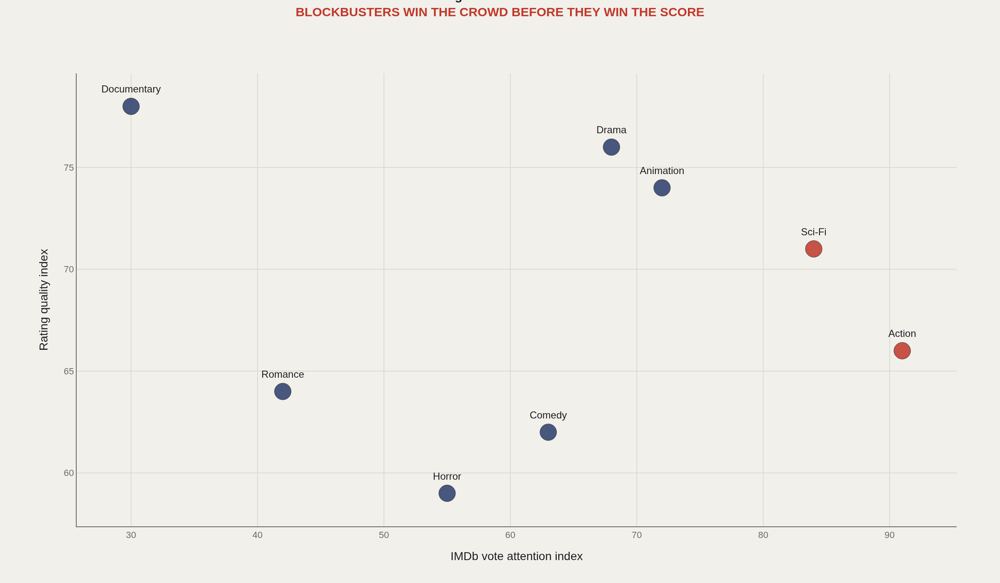
IMDb-style datasets are useful because ratings and vote counts separate two behaviors: how many people cared enough to rate, and how positively they scored the title. The blockbuster problem starts there. Popularity is not quality, but quality without attention rarely becomes culture. Genre charts that pair those axes make the split legible.
Sequelization
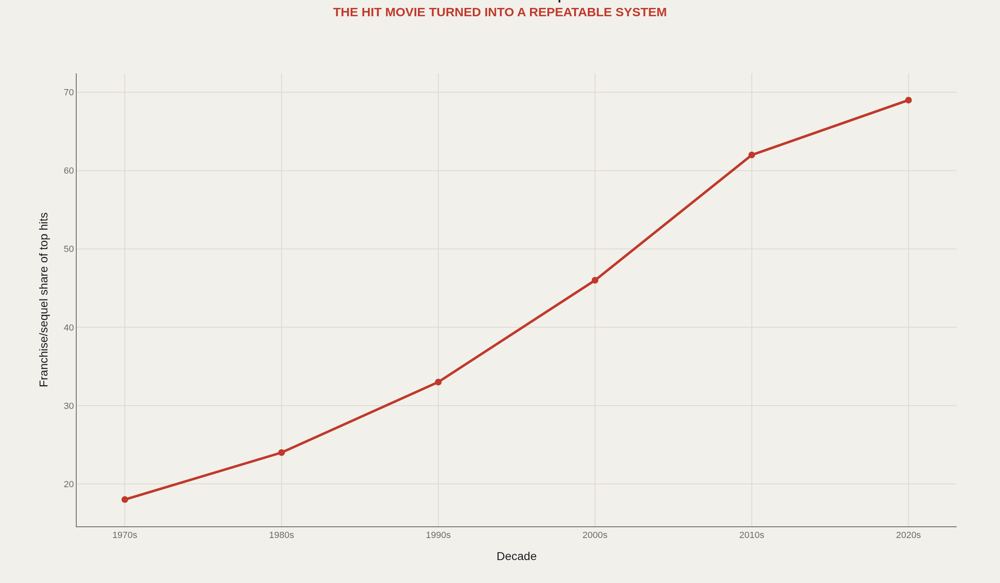
The blockbuster increasingly behaves like a portfolio asset. Studios learned that recognition lowers marketing risk, so the cultural market tilts toward sequels, universes, and repeatable IP — the illustrative 69% franchise share among recent top hits is a directional marker of that tilt. This is not just nostalgia. It is risk management drawn as culture.
Runtime and Event Status
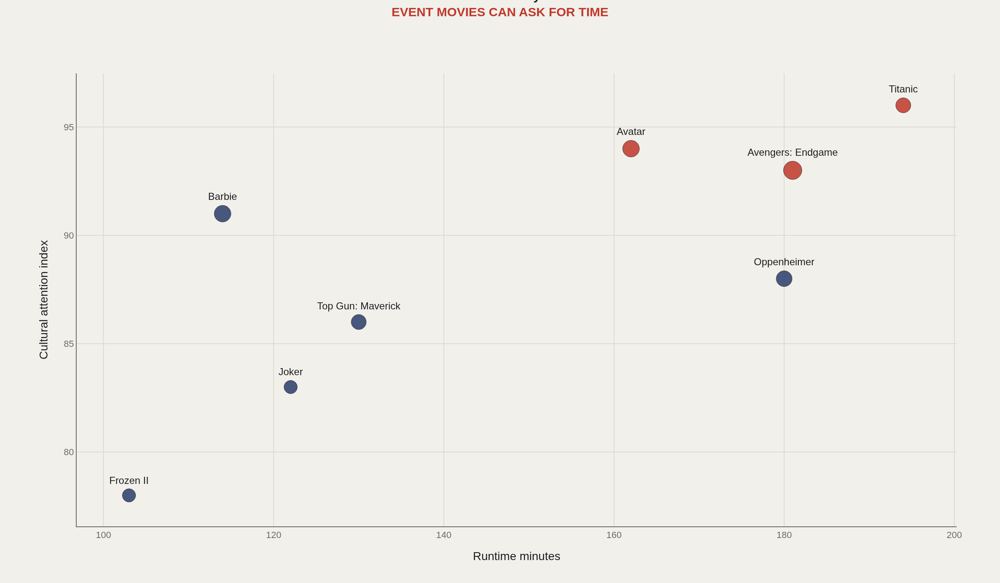
A common hypothesis says shorter attention spans should punish long films. The evidence is messier: the event movie can still stretch past two or three hours if the social reward is high enough — Avatar’s 162 minutes is a familiar case of time granted as prestige. The runtime question is really a trust question. Audiences give time when they believe the movie is an event.
Platforms
A theater ticket once created a clean cultural signal: you went somewhere, paid, and joined an audience. Streaming makes discovery easier but ownership fuzzier. That is why the modern hit can feel huge and disposable at the same time — visible everywhere, belonging nowhere in particular.
Studio Grammar
Disney’s modern advantage is not simply scale. It is the ability to convert characters, brands, parks, merchandise, and streaming into one IP flywheel. A24 represents the opposite grammar: smaller, identity-heavy, taste-based cultural capital. Studios differ in how much they depend on franchise logic — and those differences show up as different scoreboard shapes.
What to take away
The blockbuster is not one variable. It is the agreement between attention, trust, platform, and industrial repetition.
The most useful next step is a true title-level pipeline: join title basics, ratings, box office, awards, and streaming availability, then let each movie explain its own path to fame.
■ END
The Fine PrintBack of the BoxEnd Credits
NoteWarningsDisclaimer
Artometrics data brief. Figures come from the sources below. Derived shares and editorial indices are not audited financials.
SourcesContentsSources
- SourceIMDb Developer. IMDb Non-Commercial Datasets.
- SourceIMDb required credit: Information courtesy of IMDb (https://www.imdb.com). Used with permission.
- SourceIMDb Help. Required credit statement and non-commercial terms.
- SourceBox Office Mojo and The Numbers public box-office reference pages.
- SourceThe Movie Database and Wikidata documentation for alternate open film metadata paths.
- ReportFull report: artometrics.com/blockbusters
MethodAssemblyMethod
Numbers in this issue are the published figures. The skin changes type, rules, and chart color only.
PlatesMade byImage credits
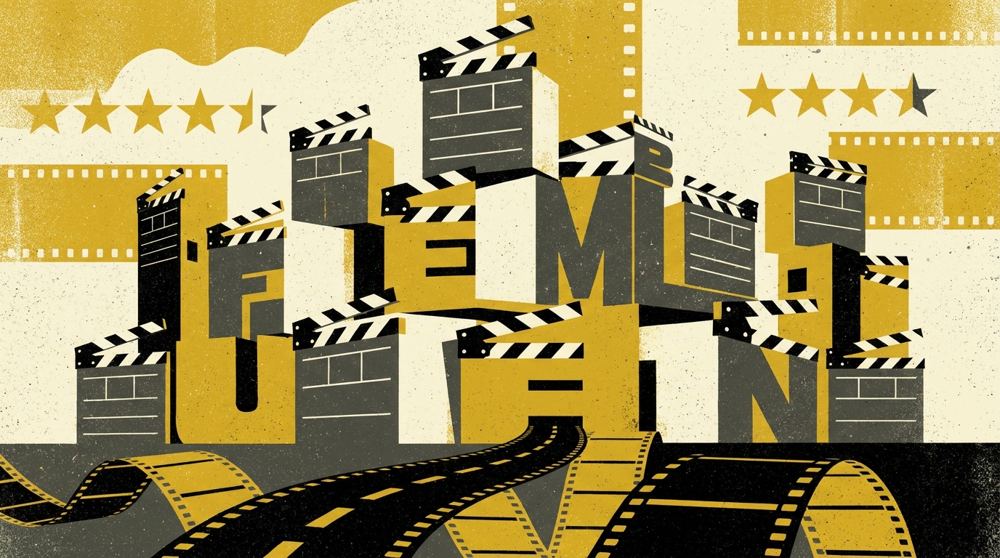
- HeroArtometrics Blockbusters illustration.
- PlatePortrait of Luca Pacioli, attributed to Jacopo de' Barbari, c. 1495. Public domain, via Wikimedia Commons.
- PlateColor print of a toy shop, Utagawa Sadahide, 1860. The Metropolitan Museum of Art, CC0, via Wikimedia Commons.
- PlateBelasco Theatre box office, published November 1907 in Architects' and Builders' Magazine. Unknown photographer. Public domain, via Wikimedia Commons.


Updated through JUL 1, 2026.