
JUN 15, 2026 · Netflix
Netflix
Netflix's Movie-Heavy Catalog Hid Its Longest Titles in Interactives
Black Mirror: Bandersnatch hit 312 minutes; median duration rose from 41 to 98 minutes between 2008 and 2021 as the catalog skewed longer.
By Kyle McAuliffe · · 3 min
Median duration in Netflix's catalog rose from 41 minutes in 2008 to 98 minutes by 2021—a 139% climb driven by longer films, multi-season TV encodings, and interactive outliers like Black Mirror: Bandersnatch, which clocked 312 minutes.
The working file holds 7,787 records. Median duration is 88.0; the highest observed duration is 312, led by Black Mirror: Bandersnatch. Movie is the most common type label.
7,787
Catalog records spanning 2008–2021
41 to 98 minutes
Median duration rose 139% across the period
How the pattern changed over time
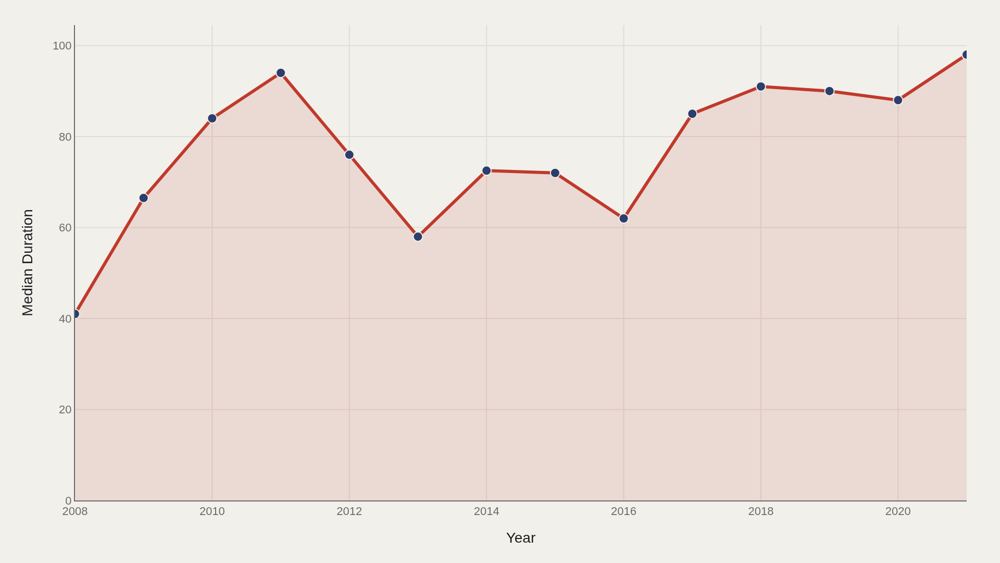
Median duration rises from 41.0 in the opening period to 98.0 at the close—a catalog whose typical row lengthens as the library ages. That climb reflects more feature-length films, longer TV season encodings, or both. The trend is a mix signal, not a single format story.
Who sits at the top
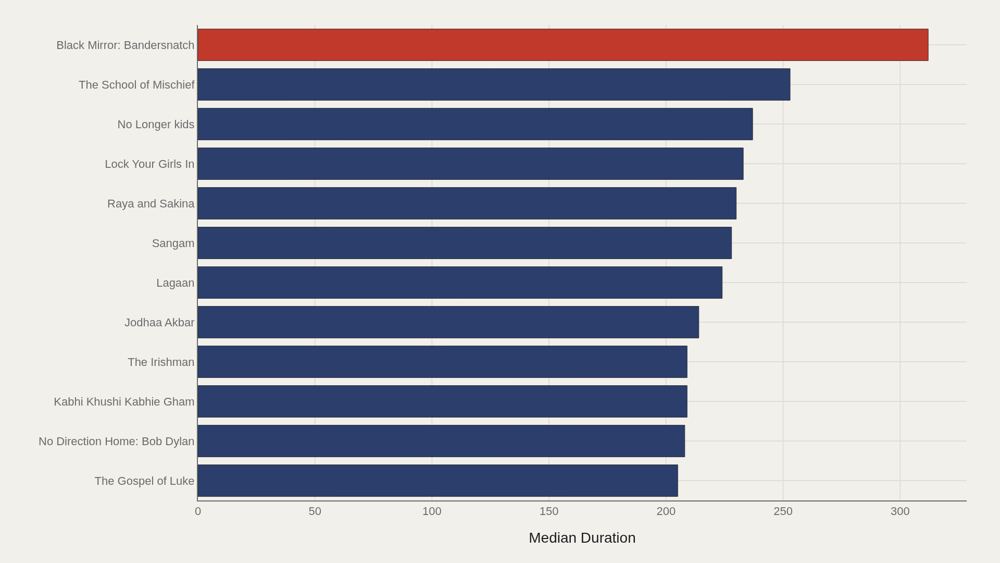
Black Mirror: Bandersnatch leads at 312; 226 marks the median among the top dozen. Interactive and long-form outliers define the ceiling. Most of the library lives nowhere near those peaks—which is why the median of 88.0 remains the better everyday calibration.
How the field is spread
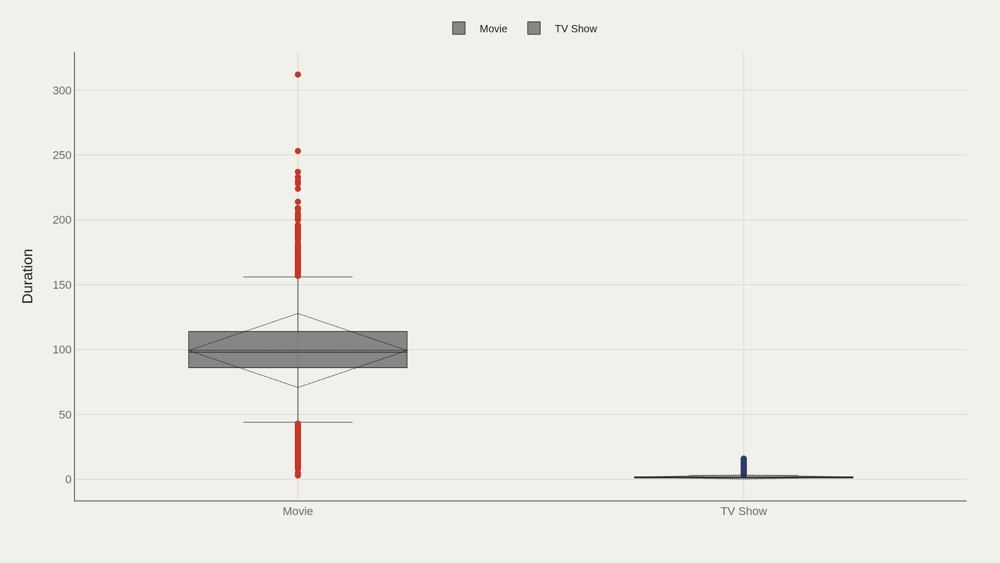
Duration by type separates movies from TV rows in the catalog encoding. The boxes show whether each type shares a tight middle or stretches into long tails. Movie dominance in count does not guarantee movie dominance in duration shape. The distribution is where that distinction becomes visible.
Concentration
The top 5 title entries account for 38% of the aggregate duration—a steep head for a library that otherwise looks vast on the homepage. Steep Pareto curves mean a small set of rows drives most of the summed duration signal. The long tail is real inventory; it is not where the aggregate concentrates.
Concentration
A second Pareto view of the same 38% concentration confirms the head–tail split under an alternate chart export. When two exhibits agree on the same share, the claim is about structure in the file—not a rendering choice.
What to take away
Median duration climbed from 41.0 to 98.0 while Movie remained the most common type. A handful of long outliers—Bandersnatch at 312 among them—and a 38% duration concentration in the top five rows show how uneven a "library" can be once you stop counting titles and start summing length.
Use the charts to separate mix, length, and concentration before treating any homepage as a flat shelf.
■ END
The Fine PrintBack of the BoxEnd Credits
NoteWarningsDisclaimer
Artometrics data brief. Figures come from the sources below. Derived shares and editorial indices are not audited financials.
SourcesContentsSources
MethodAssemblyMethod
Numbers in this issue are the published figures. The skin changes type, rules, and chart color only.
PlatesMade byImage credits
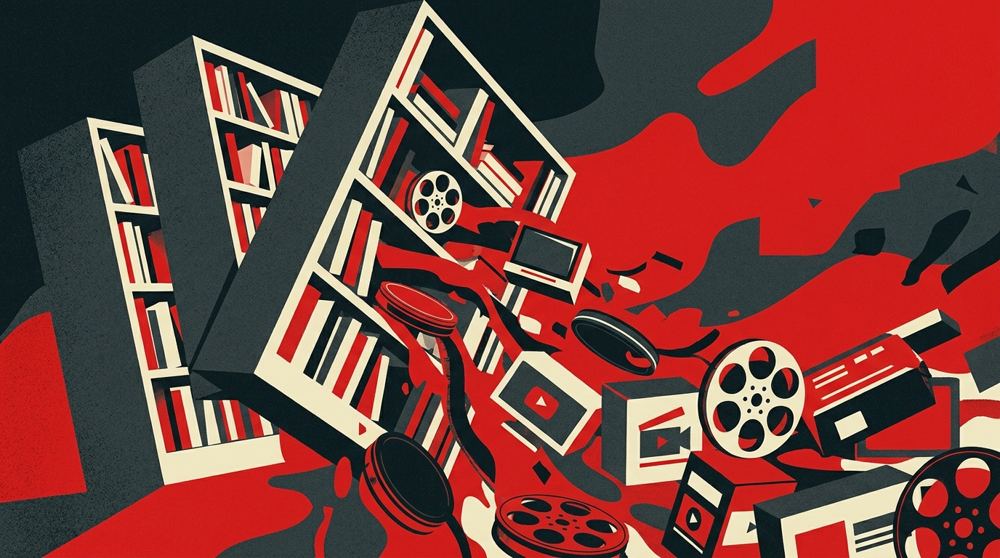
- HeroArtometrics Netflix illustration.
- PlatePortrait of Luca Pacioli, attributed to Jacopo de' Barbari, c. 1495. Public domain, via Wikimedia Commons.
- PlateColor print of a toy shop, Utagawa Sadahide, 1860. The Metropolitan Museum of Art, CC0, via Wikimedia Commons.
- PlateBelasco Theatre box office, published November 1907 in Architects' and Builders' Magazine. Unknown photographer. Public domain, via Wikimedia Commons.


Updated through JUN 15, 2026.