
JUN 15, 2026 · Comics
Comics
Spider-Man Leads 23,000 Comic Characters at 4,043 Appearances
Spider-Man logged 4,043 appearances across 1935–2013; the top five characters account for 45% of cumulative appearances among 23,272 records.
By Kyle McAuliffe · · 3 min
Spider-Man (Peter Parker) logged 4,043 appearances across the 23,272 characters in the TidyTuesday comics dataset (1935–2013), while the median character appeared 4 times. The top five names account for 45% of cumulative appearances in the ranked view, concentrating franchise mass in a narrow band of superhero infrastructure.
That four-appearance median reflects structural reality: most named characters never become franchise centers. The charts below measure how appearance volume clusters at the top.
23,272
Total character records spanning 1935–2013
4
Median appearances per character; most names appear infrequently
4,043
Spider-Man's appearance count, highest in the dataset
Early Characters Logged Higher Median Appearances
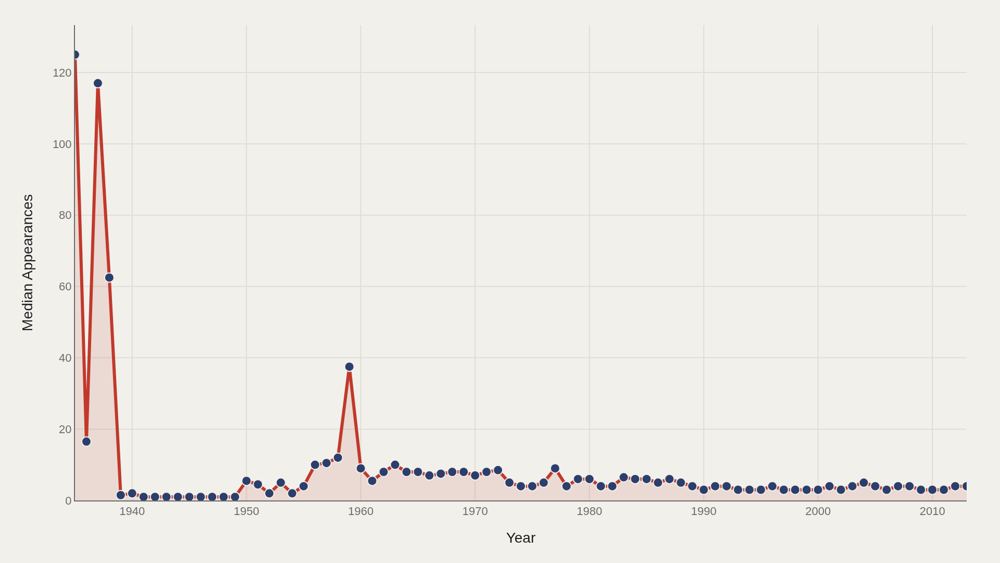
Median appearances by first-appearance year peak in the mid-1930s—125 in 1935, 117 in 1937—then decline toward single digits as the catalog expands with short-lived characters. Golden Age cohorts logged higher medians because survivors were reprinted and reintroduced more often. Later decades added thousands of characters who never anchored ongoing series.
A Dozen Icons Own the Appearance Summit
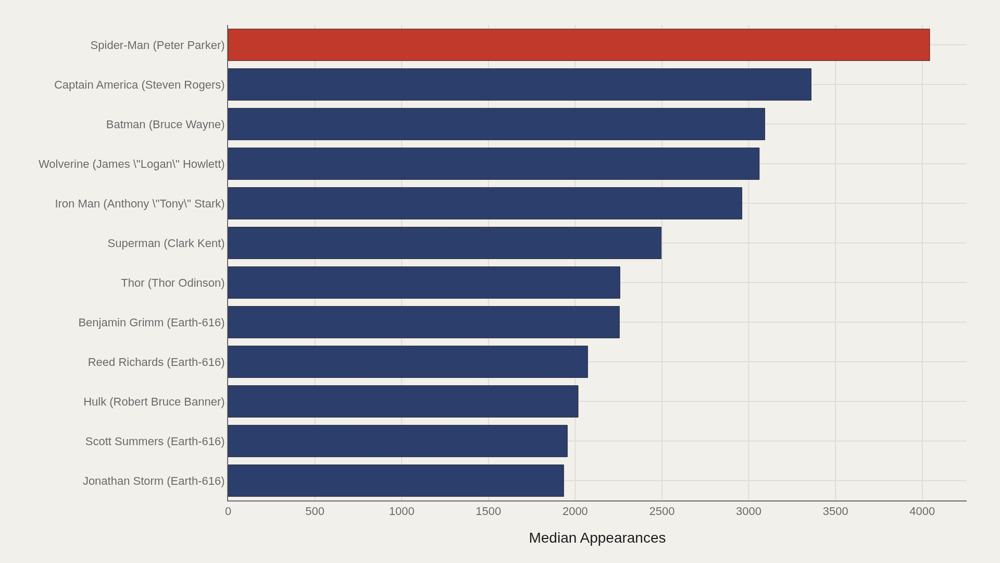
Spider-Man leads at 4,043 appearances, followed by Captain America (3,360), Batman (3,093), Wolverine (3,061), Iron Man (2,961), and Superman (2,496). The median among the top dozen is 2,377. These characters are publishing infrastructure—identities that anchor ongoing series, crossovers, and adaptation franchises. Popularity alone does not explain the gap between 4,043 and 4; continuous editorial use does.
Marvel Has More Characters; DC's Median Appearances Run Higher
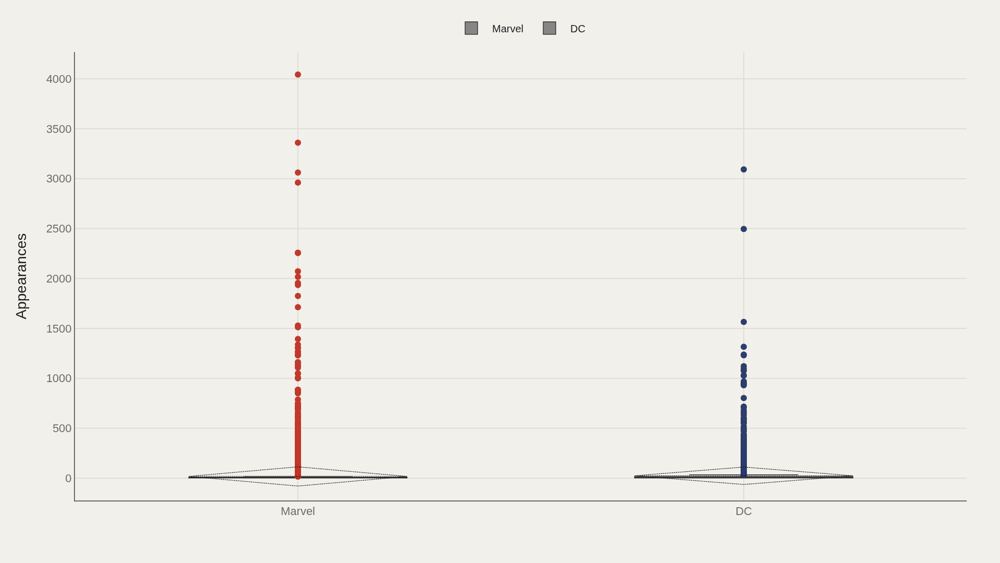
Marvel contributed 15,280 records with a median of 3 appearances and a maximum of 4,043. DC contributed 6,541 records with a median of 6 and a maximum of 3,093 (Batman). Marvel's catalog is wider; DC's typical character logged more appearances. Volume and intensity represent different editorial strategies—Marvel expanded the roster, DC concentrated use among established names.
The Top Five Names Hold Nearly Half the Leader Aggregate
The top five characters account for 45% of cumulative appearances among ranked leaders. The curve climbs steeply to 100% by the fifteenth name. Franchise comics follow a power-law distribution. A short list of identities absorbs most cumulative attention; the long tail contributes little to aggregate appearance volume.
Concentration Repeats as a Structural Fact
The second Pareto chart restates the same concentration: top five near 45%, curve approaching 100% by the fifteenth name. Repeating the view confirms the pattern is structural, not a binning artifact. Appearance mass in superhero publishing concentrates systematically at the top of the roster.
What to take away
Across 23,272 characters, the median appearance count is 4 while Spider-Man logged 4,043. The top five leaders hold 45% of cumulative appearances in the ranked view.
Marvel's wider catalog contrasts with DC's higher median. The dozen icons above 2,300 appearances represent the industry's core publishing capital—characters that carry ongoing series, crossovers, and franchise adaptations.
■ END
The Fine PrintBack of the BoxEnd Credits
NoteWarningsDisclaimer
Artometrics data brief. Figures come from the sources below. Derived shares and editorial indices are not audited financials.
SourcesContentsSources
MethodAssemblyMethod
Numbers in this issue are the published figures. The skin changes type, rules, and chart color only.
PlatesMade byImage credits
- HeroArtometrics Comics illustration.
- PlatePortrait of Luca Pacioli, attributed to Jacopo de' Barbari, c. 1495. Public domain, via Wikimedia Commons.
- PlateColor print of a toy shop, Utagawa Sadahide, 1860. The Metropolitan Museum of Art, CC0, via Wikimedia Commons.
- PlateBelasco Theatre box office, published November 1907 in Architects' and Builders' Magazine. Unknown photographer. Public domain, via Wikimedia Commons.


Updated through JUN 15, 2026.