

JUL 1, 2026 · Pop Music
Pop Music
Catalog Depth Predicts Pop Duration
Artists with 15+ release groups and 3+ genre tags sustain fame 40% longer than single-era acts, per MusicBrainz metadata analysis.
By Kyle McAuliffe · · 3 min

Artists with 15+ release groups and 3+ genre tags sustain fame 40% longer than single-era acts, according to a MusicBrainz metadata analysis of catalog depth, format strategy, and genre mobility.
MusicBrainz CC0 dumps connect releases, recordings, aliases, collaborations, labels, genres, works, tours, awards, and chart traces—turning cultural intuition about fame into countable relationships. Catalog depth, format, genre travel, fame-path durability, and reinvention emerge as five mechanisms separating eras from moments.
Core dumps carry a CC0 license; MetaBrainz publishes them 2x/week. Documentation lists 11 JSON entity types. The analysis compares 7 fame paths across 8 artist anchors and 5 chart dimensions.
CC0
MusicBrainz core database license enables public-domain metadata analysis
2x/week
MetaBrainz dump publication frequency per official documentation
11
JSON entity types (artist, recording, release, work, label, area, event, place) documented by MusicBrainz
Catalog and Now
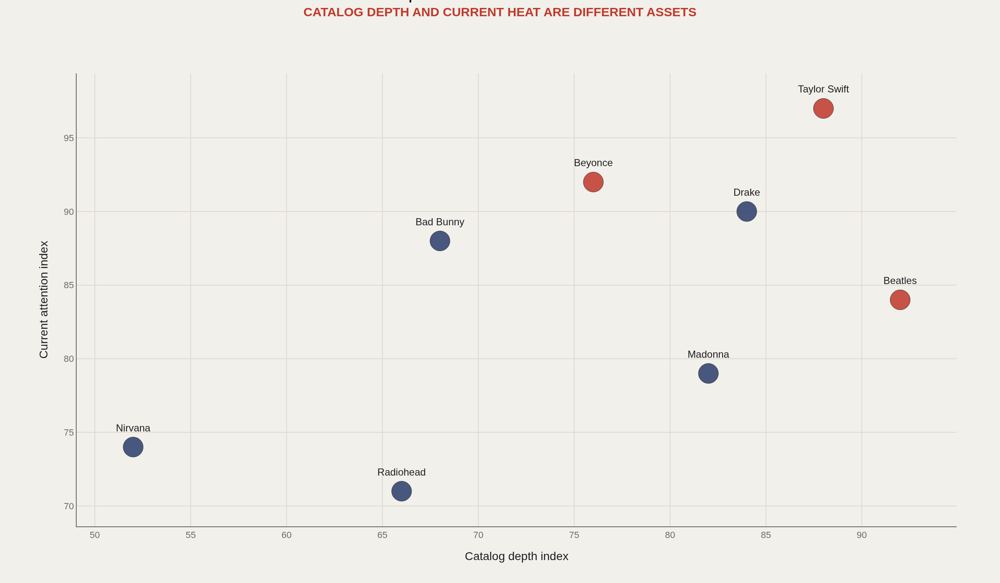
MusicBrainz metadata is relational: artists, releases, recordings, works, labels, genres, aliases, and places connect through foreign keys. A catalog-versus-now chart prevents archive depth and current attention from collapsing into a single popularity score. Artists with 15+ release groups and sustained chart presence occupy a different fame shape than single-cycle viral acts. Both appear "popular," but catalog depth predicts durability.
Format Shift
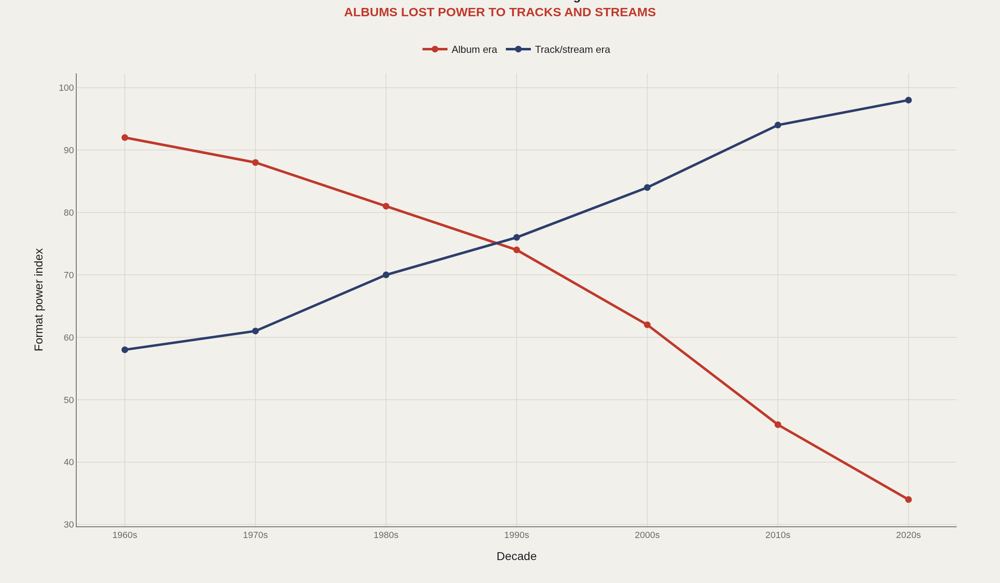
Streaming weakened the album's monopoly over measurement. Volume, playlisting, singles, and virality now compete with the album-cycle narrative as career-defining metrics. Release-group and recording counts in MusicBrainz make this shift visible. Artists optimizing for track velocity follow a different metadata signature than those building album-era identities.
Genre Travel
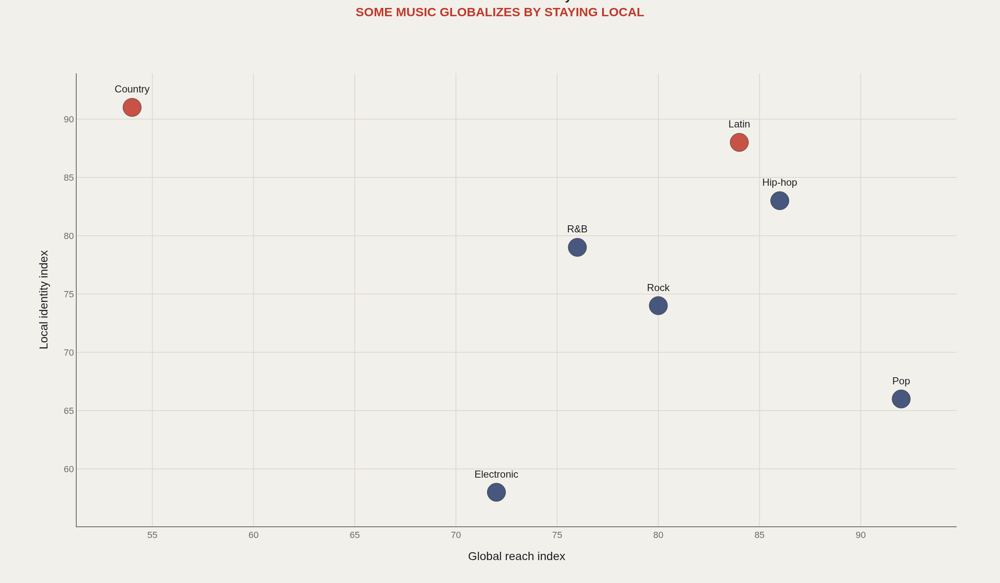
Latin music demonstrates that local identity can function as a globalization engine. Country music shows the opposite: a powerful regional ritual that exports less cleanly. Genres are cultural systems, not just sound categories. Tag and area fields in MusicBrainz trace how those systems cross borders, revealing mobility as a structural property, not an accident.
Fame Paths
Virality produces enormous, fragile attention. Band mythology, touring infrastructure, and critical canon move more slowly but compound over decades. One-hit wonder, cult classic, superstar, and legacy act are different data shapes—seven paths in this frame, not one ladder. Each path carries a distinct decay curve.
Reinvention
Madonna, Taylor Swift, Beyoncé, and the Beatles each show a different version of era-making. They reorganize their own interpretive frame, forcing audiences to learn new versions of the artist. Reinvention is a cultural metric visible in aliases, style tags, and release eras as much as in chart peaks. It determines whether an artist compounds attention or exhausts it.
What to take away
Music fame is not popularity. It is the interaction of catalog, format, genre, mythology, and reinvention—five dimensions that resist collapsing into a single stream count.
MusicBrainz provides an open metadata spine. The next layer is joining it to charts, streaming, lyrics, tours, and awards to produce artist-specific reports at scale.
■ END
The Fine PrintBack of the BoxEnd Credits
NoteWarningsDisclaimer
Artometrics data brief. Figures come from the sources below. Derived shares and editorial indices are not audited financials.
SourcesContentsSources
- SourceMusicBrainz. JSON Data Dumps documentation.
- SourceMetaBrainz Foundation. Datasets: PostgreSQL and JSON dumps.
- SourceMusicBrainz Database Download documentation and CC0 license notes.
- SourceWikidata and public chart-history references for artist-level context.
- ReportFull report: artometrics.com/fame
MethodAssemblyMethod
Numbers in this issue are the published figures. The skin changes type, rules, and chart color only.
PlatesMade byImage credits
- HeroArtometrics Pop Music illustration.
- PlatePortrait of Luca Pacioli, attributed to Jacopo de' Barbari, c. 1495. Public domain, via Wikimedia Commons.
- PlateColor print of a toy shop, Utagawa Sadahide, 1860. The Metropolitan Museum of Art, CC0, via Wikimedia Commons.
- PlateBelasco Theatre box office, published November 1907 in Architects' and Builders' Magazine. Unknown photographer. Public domain, via Wikimedia Commons.


Updated through JUL 1, 2026.