

JUL 1, 2026 · Fandom
Fandom
Six Sports Identity Patterns
Ten major markets split into six identity archetypes shaped by title density, league mix, and championship drought.
By Kyle McAuliffe · · 3 min
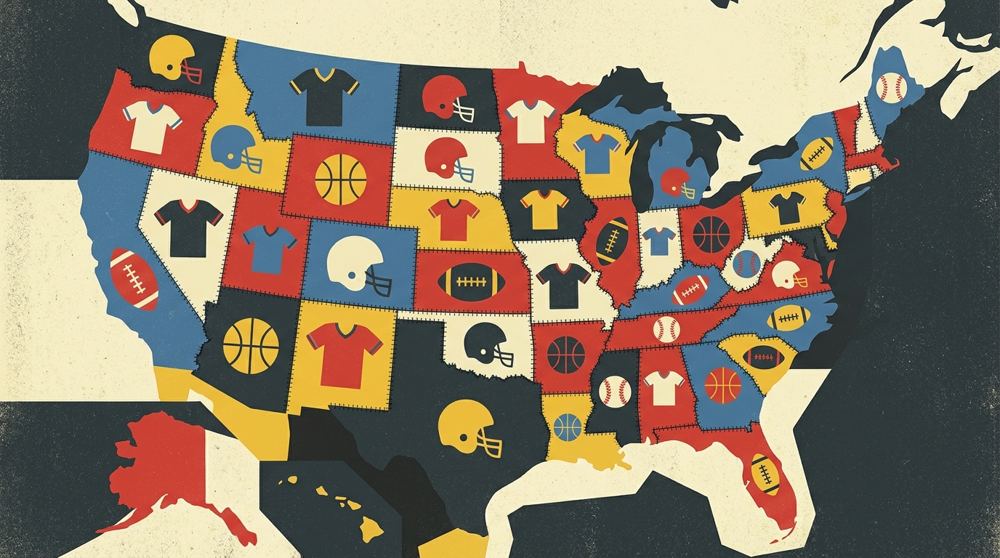
Ten large U.S. markets split into six sports identity archetypes, shaped by title density, league mix, and championship drought length.
A team is never just a team. It is attached to a region, a media market, a league structure, and a local memory system. That context changes what the same number means. This analysis maps how regions become recognizable under the data microscope.
The scale: 10 large markets compared, grouped into 7 regions for title-density analysis, producing 6 identity archetypes.
10
Large markets compared — each carries a distinct portfolio of championship memory, league presence, and cultural expectation
7
Regional groupings analyzed for title density — Northeast and Great Lakes show unusually deep championship archives
6
Identity archetypes mapped — archive, star, football ritual, hunger, glamour, balanced — each shaped by drought length and league mix
Regional Title Density
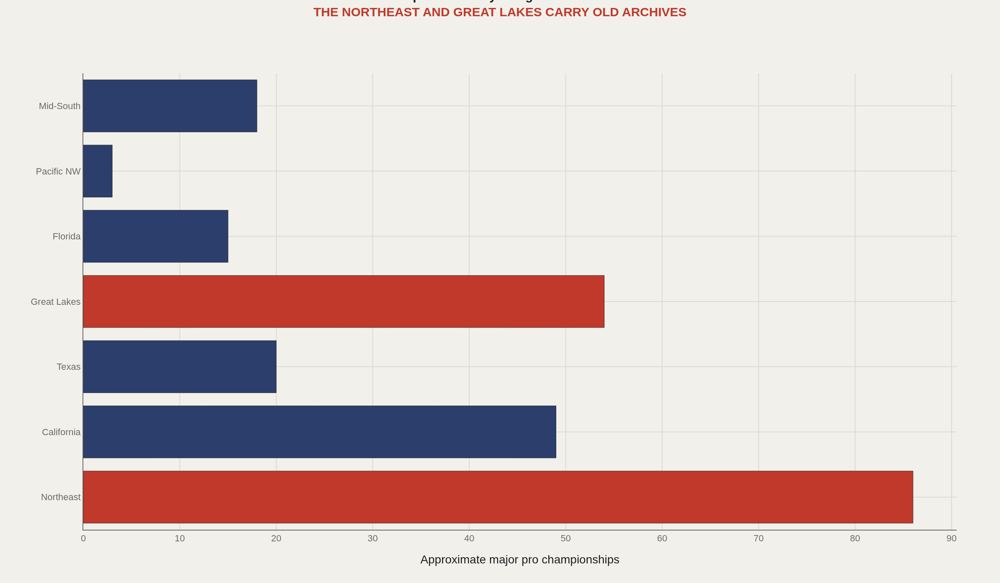
A region's sports identity is not only current fandom. It is the sediment of old championships, old rivalries, and inherited expectations. The Northeast and Great Lakes have unusually deep archives because their leagues, cities, and media systems matured early.
Market Stack
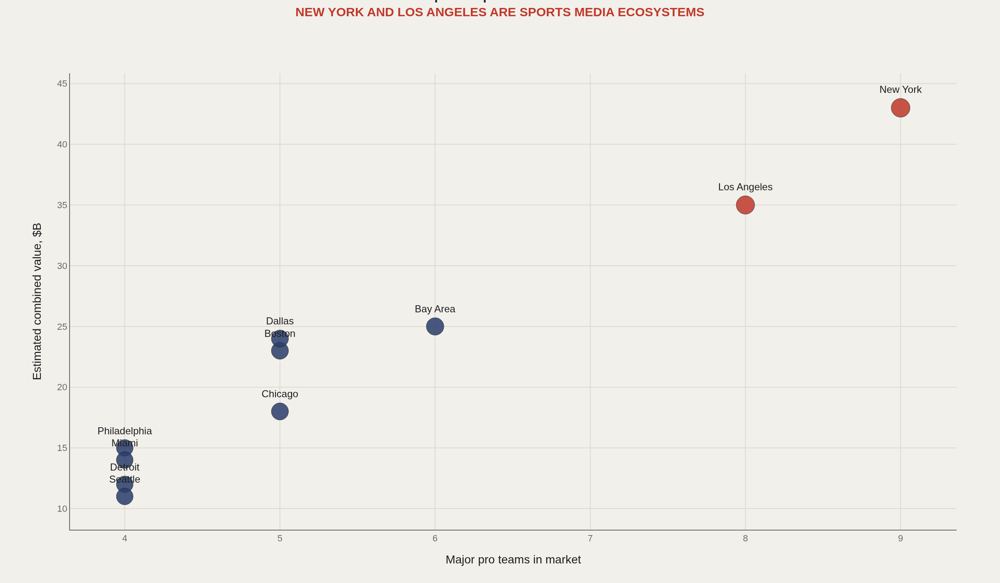
New York and Los Angeles are not simply large markets. They are sports ecosystems where multiple teams compete for attention, mythology, and local legitimacy. That makes cross-report comparison useful: a Knicks drought and a Lakers title live in the same media bloodstream.
Sport Dna
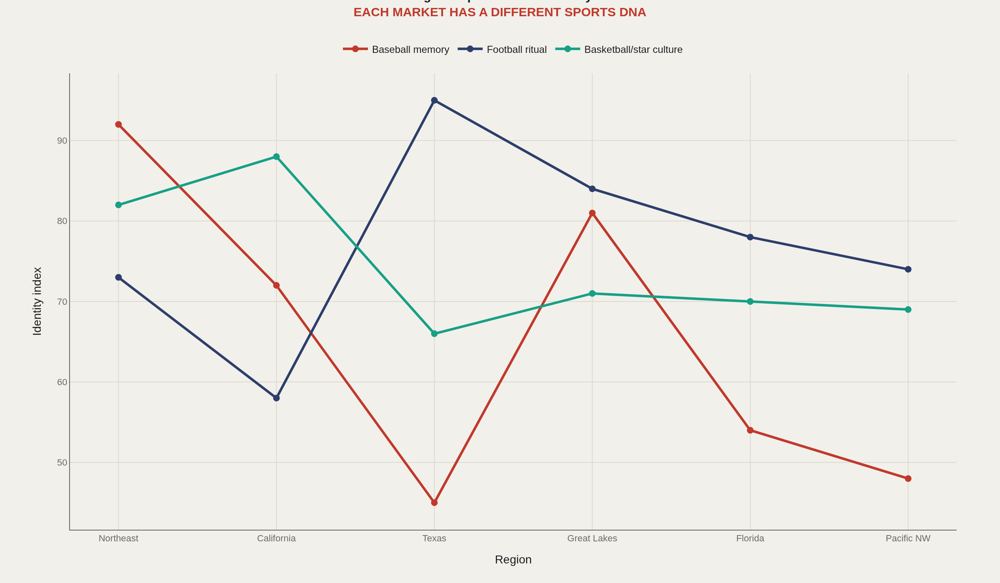
Texas reads as football ritual. California leans toward basketball and glamour. The Northeast keeps baseball memory unusually alive. The point is not stereotype; it is signal. Regional sports culture gives the same win-loss record a different accent.
City Pain versus Success
Multi-team cities do not experience success cleanly. A Boston fan can live near constant banners while a specific rival city experiences one drought as civic identity. Pain is often team-specific, but markets distribute and amplify it.
Identity Types
Some places sell archive. Some sell stars. Some sell football Sundays. Some sell hunger because they have not yet received the validating title. This is the bridge to future city bioeconomics reports: sports data is one part of a place's cultural fingerprint.
What to take away
Sports identity is regional before it is rational. Market size, title archives, sport specialization, and drought all shape the meaning of a fan base.
This gives the next batch a new tool: every team profile can now ask not only how good the team is, but what kind of place produced that version of good, bad, rich, cursed, or glamorous.
■ END
The Fine PrintBack of the BoxEnd Credits
NoteWarningsDisclaimer
Artometrics data brief. Figures come from the sources below. Derived shares and editorial indices are not audited financials.
SourcesContentsSources
- SourceReference franchise histories from Baseball Reference, Basketball Reference, Pro Football Reference, and Hockey Reference.
- SourceForbes. Professional sports franchise valuation lists.
- SourceU.S. Census regional framing, used only as a broad geography reference.
- SourcePublic attendance, championship, and market summaries from league history pages.
- ReportFull report: artometrics.com/fandom
MethodAssemblyMethod
Numbers in this issue are the published figures. The skin changes type, rules, and chart color only.
PlatesMade byImage credits
- HeroArtometrics Fandom illustration.
- PlatePortrait of Luca Pacioli, attributed to Jacopo de' Barbari, c. 1495. Public domain, via Wikimedia Commons.
- PlateColor print of a toy shop, Utagawa Sadahide, 1860. The Metropolitan Museum of Art, CC0, via Wikimedia Commons.
- PlateBelasco Theatre box office, published November 1907 in Architects' and Builders' Magazine. Unknown photographer. Public domain, via Wikimedia Commons.


Updated through JUL 1, 2026.