


JUN 15, 2026 · Beyoncé
Beyoncé
Beyoncé and Taylor Swift Line by Line
A lyric-level comparison of two era-defining catalogs—theme, language, and structure.
By Kyle McAuliffe · · 3 min

Two catalogs define a generation of pop authorship. Line-level lyric tables make it possible to compare them the way a critic compares albums — by recurring titles, repeated lines, and how densely each artist’s words fill the extract.
The working file holds 22,616 records. Beyoncé is the most common artist name in the rows on hand — a reminder to read every chart as a view of this extract’s balance, not as a claim that one career is larger than the other in absolute terms.
22,616
Records in the working dataset
Beyoncé
Most common Artist name
Landscape
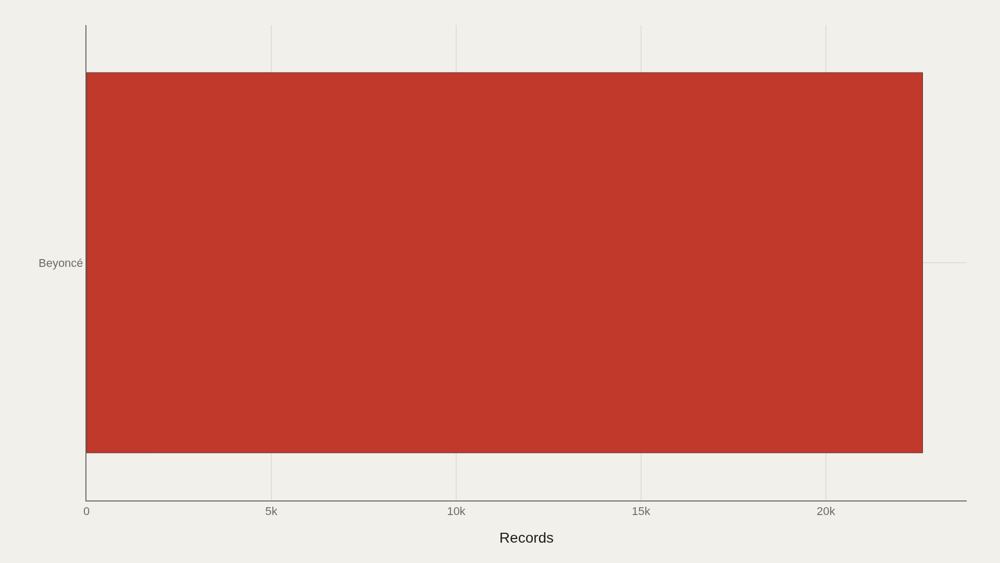
Beyoncé dominates with 22,616 records in the category view of this extract. The main bucket carries the story; the field does not show a meaningful long-tail split of artist labels once the file is filtered as published. Treat that dominance as a coverage fact about the working table — which lines were included — before treating it as a comparative verdict on two careers.
Who sits at the top
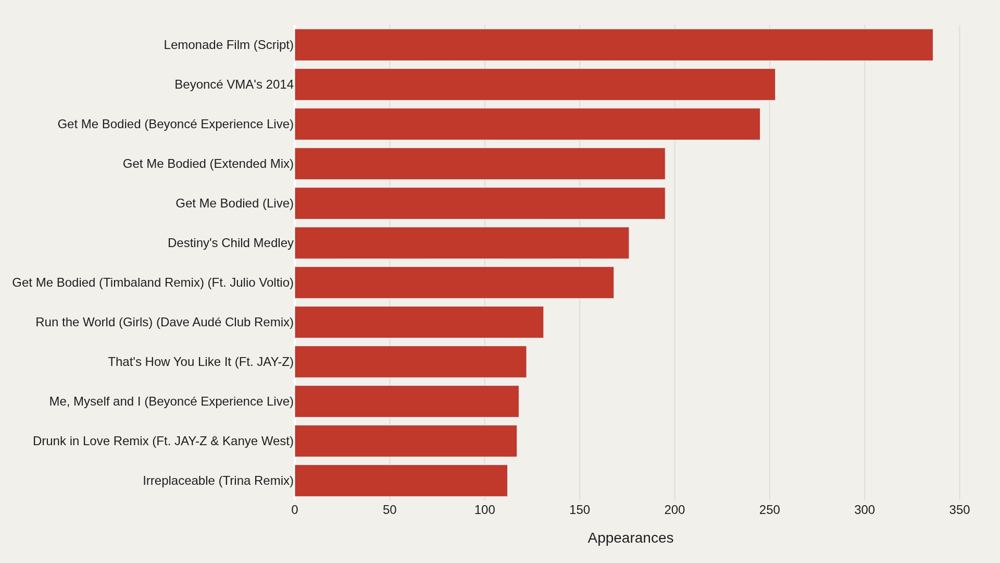
Lemonade Film (Script) appears 336 times — the most recurring song-name entity in the file. The top dozen account for a visible share of all 22,616 rows. Long scripts and multi-part projects generate more line rows than a three-minute single. Recurrence at the top is often a document-length effect as much as a “favorite song” effect.
Category
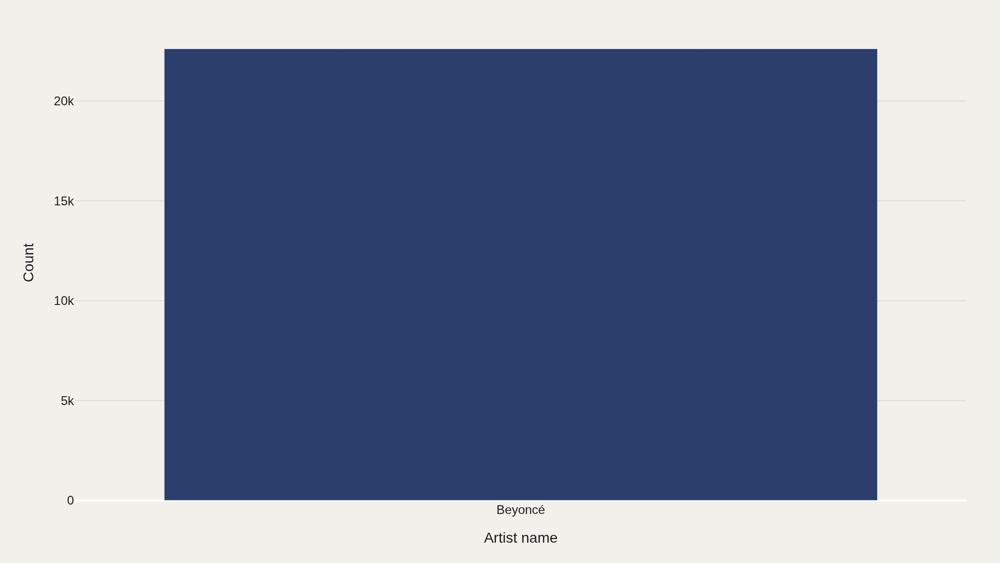
Beyoncé is the largest bucket with 22,616 records. Category concentration shows where editorial attention should focus first when reading the extract. If the file is Beyoncé-heavy by construction, every later frequency claim inherits that imbalance. Fair comparison starts by stating the row share out loud.
Frequency
Most song-name entities appear only once; a small head revisits repeatedly. That power-law shape is typical of lyric catalogs, guest lists, and credit tables: a long tail of unique titles, a short head of projects that keep generating lines.
Mix
“If I let you go” is the most repeated line in the extract — a refrain-level recurrence that secondary dimensions surface when the primary table has no numeric score column. Repeated lines are the lyric equivalent of a hook chart: they show what the text keeps returning to, not which song sold the most.
What to take away
Line-by-line tables make authorship countable: 22,616 rows, a Beyoncé-heavy artist share in this extract, Lemonade Film (Script) at 336 appearances, and “If I let you go” as the most repeated line. Frequency and mix answer different questions than sales or streams.
Use the charts to see coverage and recurrence — then check how the extract was built before treating any refrain as a career-wide signature.
■ END
The Fine PrintBack of the BoxEnd Credits
NoteWarningsDisclaimer
Artometrics data brief. Figures come from the sources below. Derived shares and editorial indices are not audited financials.
SourcesContentsSources
MethodAssemblyMethod
Numbers in this issue are the published figures. The skin changes type, rules, and chart color only.
PlatesMade byImage credits
- HeroArtometrics Beyoncé illustration.
- PlatePortrait of Luca Pacioli, attributed to Jacopo de' Barbari, c. 1495. Public domain, via Wikimedia Commons.
- PlateColor print of a toy shop, Utagawa Sadahide, 1860. The Metropolitan Museum of Art, CC0, via Wikimedia Commons.
- PlateBelasco Theatre box office, published November 1907 in Architects' and Builders' Magazine. Unknown photographer. Public domain, via Wikimedia Commons.


Updated through JUN 15, 2026.