
JUN 15, 2026 · Pixar
Pixar
Pixar's Critic Scores Broke Only Twice—Cars 2 and Lightyear
Pixar's median Rotten Tomatoes score is 96%, but Cars 2 hit 40% and Lightyear stalled the streak—data from 24 rated theatrical features.
By Kyle McAuliffe · · 4 min
Pixar holds a 96% median Rotten Tomatoes score across 24 rated theatrical releases, but two films broke the streak: Cars 2 at 40% and Lightyear. The studio stretched runtimes by 17 minutes between early and recent eras while CinemaScore grades held at A+—audiences stayed loyal even when critics split.
This analysis joins TidyTuesday 2025-03-11 Pixar films data with public_response scores: 27 theatrical features, 24 with critic and audience metrics attached. Five charts trace runtime creep, critic floors, audience-critic gaps, rating mix, and the relationship between length and reception.
Calibration points: a 96% median Rotten Tomatoes score; Cars 2 at 40%; +17 minutes added to median runtime from early to recent eras; CinemaScore grades clustering at A+; a longest runtime of 155 minutes; Toy Story's 81-minute floor; and zero PG-13 ratings in the theatrical set.
96%
Median Rotten Tomatoes score — Pixar's critical baseline across rated theatrical releases
40%
Cars 2's Rotten Tomatoes floor — the studio's lowest critic mark
+17 minutes
Median runtime gain from early era to 2017–present — structural shift in feature length
Runtime Creep
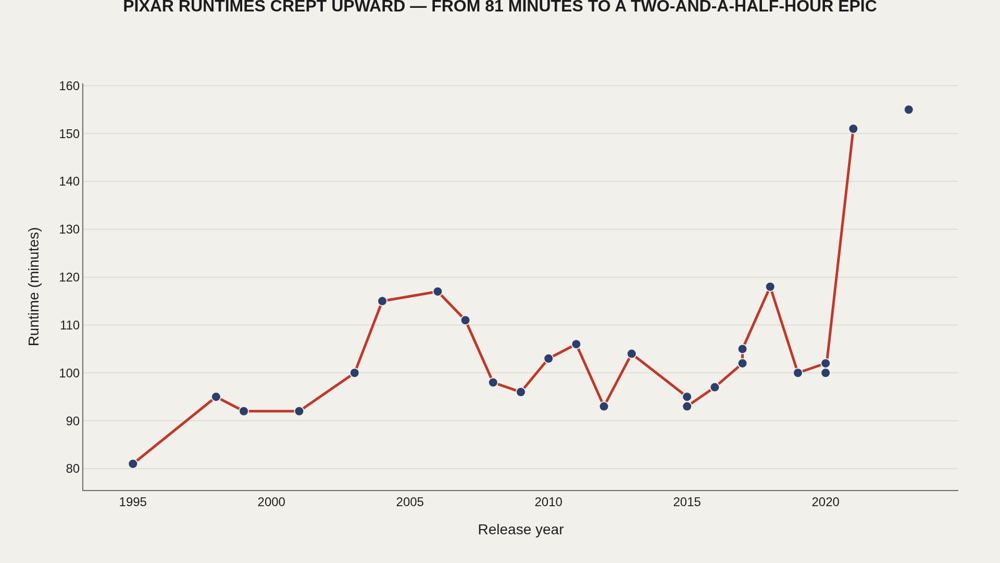
Pixar's theatrical releases did not stay the compact 81-minute package of Toy Story. Median runtime climbed from 98 minutes (through 2006) to 116 minutes for films since 2017—a structural shift in what a Pixar feature is allowed to be. The longest entry runs 155 minutes. Early films clustered around 98 minutes; recent releases expanded by 17 minutes at the median. The change is not noise—it is embedded in the studio's evolving production model.
Critic Scores
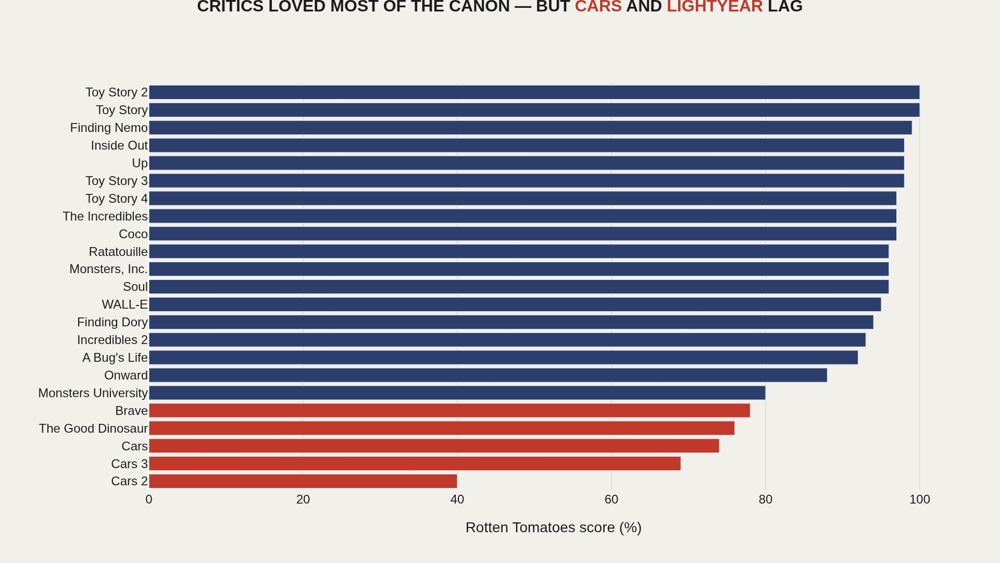
The median Rotten Tomatoes score across rated films is 96%—elite by any studio standard. Pixar built a reputation on consistency, not occasional brilliance. Cars 2 sits at 40%, the critic floor. Toy Story and several sequels hit 100%. The spread is narrow by Hollywood standards, but the low end clusters around mid-2000s franchise experiments and later IP-forward releases.
Audience vs Critics
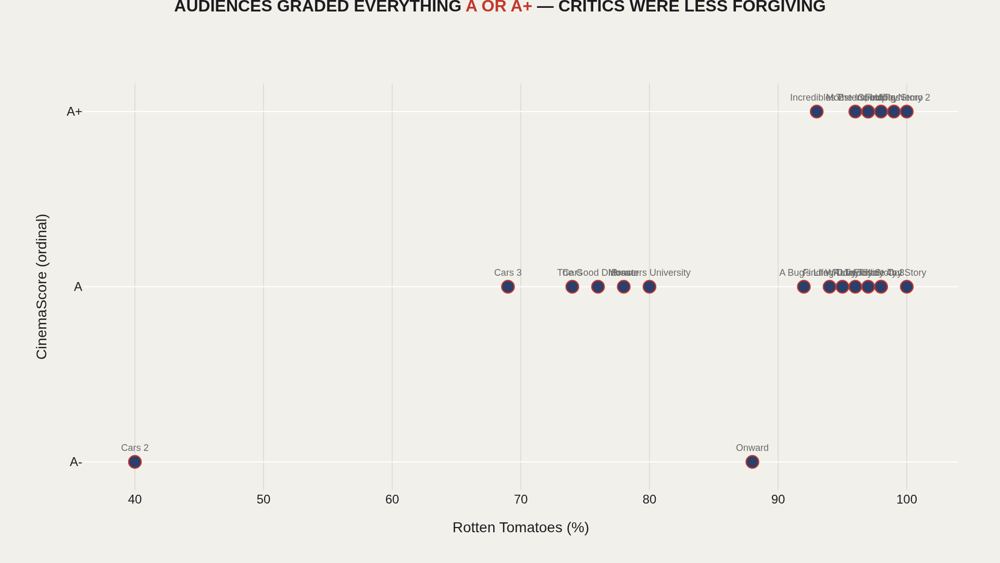
CinemaScore grades cluster at A and A+ across the board. Audiences who showed up opening weekend were rarely disappointed—or at least rarely admitted it on exit polls. Critics were the discriminating layer. Films that earned A+ crowd grades still span a 74–100% Rotten Tomatoes range. Pixar optimized for mass affection first, prestige second.
Rating Mix
Thirteen films carry a G rating; ten are PG. The brand's family positioning is embedded in the rating structure—zero titles in this file carry PG-13. Pixar expanded runtime and thematic weight without abandoning the all-ages lane in the theatrical set on hand.
Runtime vs Reception
Longer films do not automatically score worse—Up, Wall-E, and Inside Out combine runtimes above 95 minutes with scores above 95%. The outliers sit in the lower-right and upper-left: Cars 2 (shorter, weaker Rotten Tomatoes) versus epics that tested patience and still won. Bubble size tracks Metacritic where available—the reception stack is consistent across review systems.
What to take away
Pixar's measurable story is stability with drift: critics stayed harsh at the margins (Cars 2 at 40%), audiences stayed generous (A+ CinemaScores), and runtimes marched upward (+17 minutes at the median between eras). The brand did not break—it stretched.
The myth is magic; the data is a studio learning it could ask for more minutes, more sequels, and still keep the crowd on its side.
■ END
The Fine PrintBack of the BoxEnd Credits
NoteWarningsDisclaimer
Artometrics data brief. Figures come from the sources below. Derived shares and editorial indices are not audited financials.
SourcesContentsSources
MethodAssemblyMethod
Numbers in this issue are the published figures. The skin changes type, rules, and chart color only.
PlatesMade byImage credits
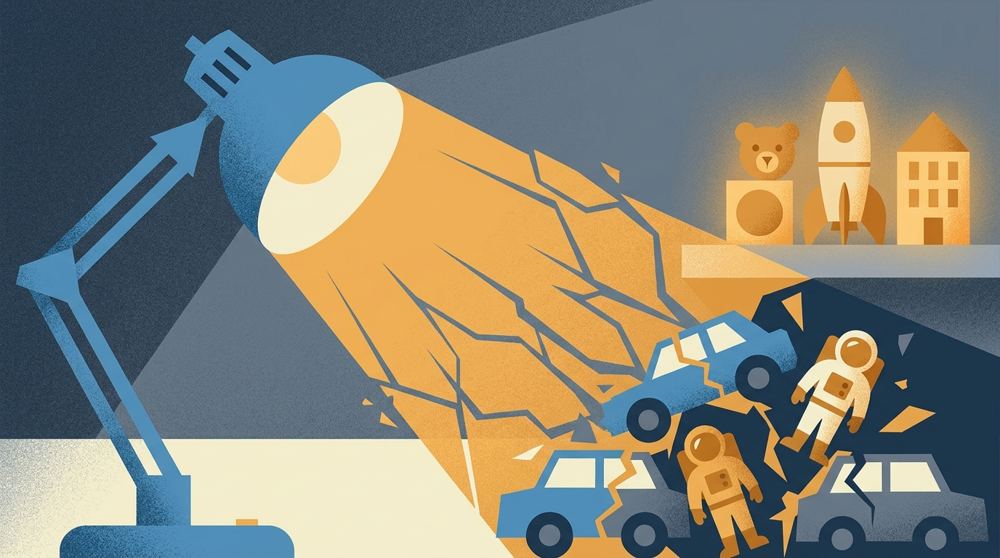
- HeroArtometrics Pixar illustration.
- PlatePortrait of Luca Pacioli, attributed to Jacopo de' Barbari, c. 1495. Public domain, via Wikimedia Commons.
- PlateColor print of a toy shop, Utagawa Sadahide, 1860. The Metropolitan Museum of Art, CC0, via Wikimedia Commons.
- PlateBelasco Theatre box office, published November 1907 in Architects' and Builders' Magazine. Unknown photographer. Public domain, via Wikimedia Commons.


Updated through JUN 15, 2026.